


Paddling Back Pain: Why It’s Often Not Your Back

Many kayakers, canoeists, and SUP paddlers blame their spine when low-back pain strikes, but the real culprit is usually tight hips and poor posture. Spending long hours sitting, in a kayak cockpit, at a desk, or in a car, shortens the hip-flexor muscles. These tight hip flexors pull the pelvis forward into an anterior pelvic tilt, increasing the lumbar curve and straining the lower spine[1][2]. By contrast, strengthening the core and glutes, and doing targeted stretches, can realign the pelvis and relieve the back.
This guide explains the biomechanics behind paddle-related back pain, then offers evidence-based posture tips, stretches, and exercises so you can paddle pain-free.
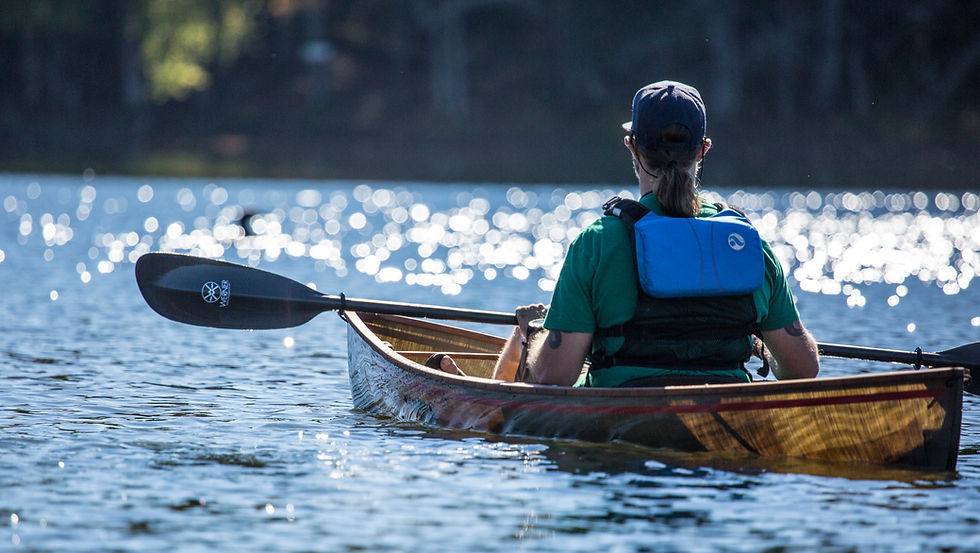
Most paddlers don’t realize that low-back discomfort rarely starts in the spine itself[1]. Instead, it often originates from tight hip muscles. The hip flexors (psoas, iliacus, rectus femoris) attach to the lumbar spine and pelvis. When they become chronically shortened, from hours hunched over a kayak hull or office chair, they tug the pelvis into a forward tilt[3][2]. This exaggerated curve (lordosis) loads the lumbar discs and joints. In fact, as one kayaking coach put it, “low back pain is frequently a manifestation of tight hip muscles”[4]. Over time, a tilted pelvis can weaken the core and contribute to serious injuries like disc herniations[3][1].
Common causes of kayaking-related back pain
Beyond tight hip flexors, several factors often conspire in paddlers:
Weak or inactive glutes and core. When the gluteal muscles are weak, the lower back must pick up the slack. Weak glutes “normally absorb” less stress, forcing it into the spine[5]. (In rehab, weak glutes are a hallmark of poor pelvic stability.) Strengthening these muscles can take pressure off the back.
Muscle imbalances and compensations. If certain muscles are tight or weak, others compensate incorrectly. For example, overworked lats and quads or underused hamstrings can alter your stroke and overload the back. (One study found that adding hip mobility exercises to a core program significantly improved balance and function in chronic back-pain patients[6].)
Previous injuries or form issues. A past back or hip injury, or paddling with poor form (slouching, looking down, uneven strokes), can lead to maladaptive patterns that strain the lower spine.
Long periods of sitting or inactivity. Spending most of your day seated (in life or in your boat) tightens hip flexors and deconditions spinal stabilizers. Health experts note that excessive sitting causes the front-of-hip muscles to shorten while the glutes and abs weaken, which directly contributes to lower back pain[2][4].
Poor posture (on and off the water). Slumping or leaning in the boat, or slouching in your car and office, stresses the lumbar vertebrae. By contrast, sitting tall with shoulders back and core engaged distributes force through the spine’s natural curves[1][4].

Often it takes a major flare-up before paddlers take action. Left unaddressed, chronic back pain can sap endurance and make every paddle feel harder.
The good news is that simple habits and exercises can prevent or even reverse pain, so you can paddle longer without discomfort[1][6].
Maintain Good Posture On and Off the Water
Strong posture is your first line of defense. When seated, whether in your boat or at a desk, aim to keep a neutral spine. Pull your shoulder blades gently back and down, lift your chest, and engage your abdominal muscles[7][2]. This reduces the load on your lumbar discs. Many paddling trainers even recommend sitting on an exercise ball or using an adjustable seatback to encourage upright alignment[8].

On the water, adjust footrests and seat height so your hips are level and knees slightly higher than hips. Keep your sternum lifted as you paddle; avoid craning forward or slumping. Over time, these posture cues train your core and spine to stay aligned, taking strain off the lower back[7][4].
Stretch and Mobilize After Paddling
Stretching counteracts the tight, flexed position of paddling. Focus especially on the hip flexors, quads, and hamstrings.
For example:

A half-kneeling hip-flexor stretch (lunging forward with one knee down) will lengthen the front thigh and hips. (In this stretch, keep the pelvis tucked under and breathe deeply.) A 2021 study found that hip-flexor stretches immediately reduced anterior pelvic tilt[9], demonstrating how quickly these stretches can relieve back pressure. You can also do a prone quad stretch (lying on one side, pulling the heel toward the buttocks) or a standing quad stretch with pelvis tucked.
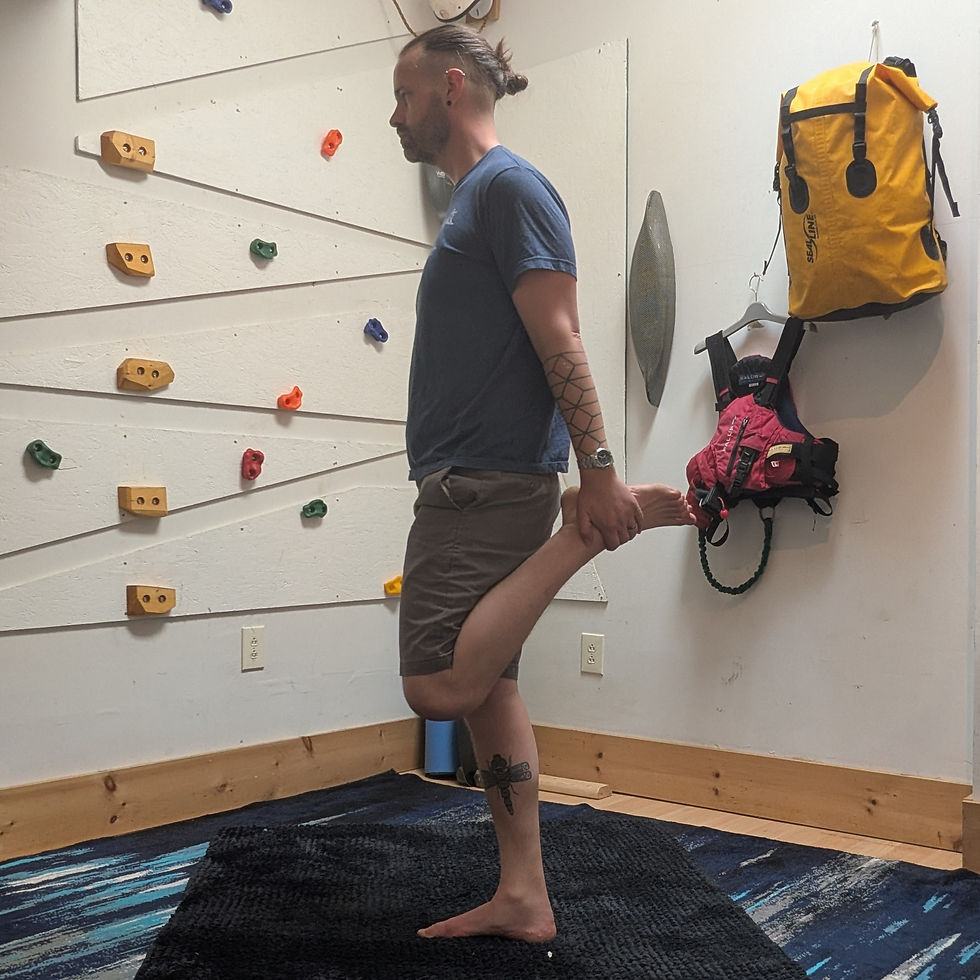
For the hamstrings, try a seated or supine leg lift: sit on the floor and gently straighten that leg toward the ceiling while keeping the other leg bent. These moves safely extend the thigh and hip without pulling on the spine. Even simple trunk twists or side-bends after paddling can open up the lateral back and torso. Hold each stretch for 20–30 seconds and repeat 2–3 times. Consistent post-paddle stretching helps restore normal pelvic alignment[9][4].

seated supine leg lift Kneeling Hip-Flexor Lunge: Kneel on one knee and lunge forward, tilting your pelvis under and keeping the torso upright. This specifically targets tight hip flexors and quads.
Seated Hamstring Stretch: Sit in a chair with one leg straight and the other bent; hinge at the hips to reach toward the extended foot (or use a strap). This releases hamstrings and glutes without compressing the back.
Torso Twist (Reclined Spinal Twist): Lie on your back with knees bent, then lower one knee to the side while keeping shoulders on the floor. This gentle twist opens the lower back and glutes.


reclined spinal twist
Regularly performing these stretches (especially after paddling or sitting long hours) helps reset your pelvis toward neutral, often reducing back discomfort[9][6].
Strengthen Your Core and Hip Stabilizers
Building up the deep muscles that support the spine is key. Add these stabilizing exercises 3–4 times per week (either after paddling or on rest days):

Bird-Dog (Quadruped Stability): On hands and knees, extend one arm forward and opposite leg back, keeping hips level. This move strengthens the deep core, back extensors, and glutes. Health sources note that the bird-dog “strengthens the core, hips, and back muscles” and helps relieve low back pain and promote proper posture[10].
Supine Glute Bridge: Lie on your back with knees bent, then lift hips by squeezing glutes until shoulders-to-knees form a line. This targets glutes and hamstrings while stabilizing the lumbar spine. (One clinical trial included supine bridging to specifically improve glute strength in back-pain patients[11].)

supine glute bridge Side-Bridge (Side Plank): From a side-lying position, support your body on one forearm or hand and lift hips. This builds the obliques and lateral core, helping resist pelvic tilt.

side bridge Clamshell (Hip Abduction): Lying on your side with knees bent, open and close the top knee like a clamshell. This isolates the gluteus medius. (The same clinical regimen that used bridging also included clamshells to strengthen hip muscles[11].)

These exercises emphasize stability, not just brute strength. You may not feel a burn like with heavy squats, but you’ll fire up the muscles that hold your pelvis and spine in place. In clinical practice, combining core work (bird-dogs, side-bridges) with hip/glute exercises (bridges, clamshells) leads to better balance and function in people with chronic back pain[10][6]. Over time, a stronger core and hips means a more efficient, pain-free paddle stroke.
Exercise | Targets | Frequency | Difficulty | Source |
Bird-Dog | Core (abs, erector spinae) & glutes | 3–4 times/week | Medium | Healthline[10] |
Supine Bridge | Glutes and hamstrings | 3–4 times/week | Easy–Med | Kim et al.[11] |
Side Plank | Obliques & lateral core | 3–4 times/week | Medium | Kim et al.[11] |
Clamshell | Gluteus medius (hip stabilizers) | 3–4 times/week | Easy | Kim et al.[11] |
The Best All-in-One Stretch for Paddlers
If you can do only one stretch, consider a reclining hamstring/hip-opener (Hand-to-Big-Toe Pose variant). Lie on your back with a strap around one foot, then gently follow a 4-part sequence: (1) lift the leg straight up with a slight bend at the knee; (2) move it out to the side; (3) bring it slightly across midline; and (4) lower it into a reclined twist. Each movement keeps the spine neutral while progressively stretching the hip flexors, quads, hamstrings, and outer hips. According to experts, lengthening the quads/hip flexors allows the pelvis to “move back toward alignment,” often bringing almost immediate relief to the low back[12]. Use a strap or band so you never pull on your knee or back. Hold each position for 5–10 breaths.
(Consult a professional if you have sciatica or disc issues; stop if any sharp pain occurs.)
Safety Note
Every body is different. If you have a herniated disc, recent injury, or severe pain, check with a doctor or physical therapist before starting new stretches or exercises. Some movements may need modification. Discontinue any stretch or exercise that increases pain.
Keep Paddling Comfortably

With these tips, you’ll help restore balance to the hips and spine so your kayak (or pack boat) sessions stay pain-free. At Hornbeck Boats, we’re committed to paddler comfort: our boats feature ergonomic seating and adjustability to support good posture and reduce fatigue. Combining ergonomic design with the habits above will keep you paddling longer and feeling younger.
For gear and further tips, visit the Hornbeck Boats blog.
Hornbeck Boats builds ultralight canoes designed to make wilderness waters simple to reach and effortless to enjoy. Born in the Adirondacks and refined through decades of backcountry use, Hornbeck canoes prioritize ease of carry, intuitive handling, and quiet efficiency over excess features or performance hype.
Our boats are made for paddlers who value access over adrenaline, solitude over spectacle, and time on the water over time wrestling gear. By removing unnecessary weight and complication, Hornbeck opens more days, more lakes, and more years of paddling—especially for solo trippers, older paddlers, and anyone who believes getting to the water should be as enjoyable as being on it.
Hornbeck isn’t about pushing limits. It’s about removing barriers.
References:
Herbeck H, Levesque A. How to Relieve & Prevent Lower Back Pain From Paddling. Paddling Magazine, Oct 10, 2014. (Accessed 2026-04-01)[1].
Soares N. Fitness for Sea Kayakers – Hips. Tsunami Rangers, May 19, 2014. (Accessed 2026-04-01)[4].
Healthline Editorial Team. “5 Anterior Pelvic Tilt Exercises”. Healthline, Dec 6, 2023. (Accessed 2026-04-01)[2][9].
Healthline Editorial Team. “How to Perform the Bird Dog Exercise and Its Core Benefits”. Healthline, Oct 27, 2023. (Accessed 2026-04-01)[10].
Kim H-D, Lee JH, Wang JW, Pyun SW. “Impact of Hip Exercises on Postural Stability and Function in Patients with Chronic Lower Back Pain.” Sports (Basel), 2025. (Accessed 2026-04-01)[6][11].
[3] Hip Flexors and Low Back Pain: A Surprising Connection - Team Health Care Clinic
[4] Fitness for Kayakers – Hips - Tsunami Rangers
[5] How Glute Muscle Weakness Affects Lower Back Pain
[6] [11] Impact of Hip Exercises on Postural Stability and Function in Patients with Chronic Lower Back Pain - PMC
[10] Bird Dog Exercise: How to Do, Variations, and Muscles Targeted


Comments