


Pack Smart, Paddle Far: Essential Safety Gear for Hornbeck Boat Owners

Don’t Leave Home Without This Essential Gear
A Safety & Readiness Guide for Hornbeck Boat Owners
Hornbeck Boats are built for one thing above all else: making it easy to get on the water—more often, with less effort. But even the most capable boat deserves a smartly prepared paddler.

The U.S. Coast Guard requires paddlers to carry a white light, a whistle, and a Coast Guard–approved life vest. Hornbeck owners tend to go a step further, not out of fear, but out of respect for remote water, changing weather, and the freedom that comes from being prepared.
The goal isn’t to overload your boat. It’s to pack intentionally.
A small dry bag, a well-outfitted PFD, and a few smart choices turn your Hornbeck into a complete, confidence-building system; whether you’re slipping into a quiet Adirondack pond or covering miles of open water.
Start With the One Thing That Always Stays With You: Your Life Vest
The single biggest factor in paddling safety is simple: wearing a PFD.
Hornbeck boats are stable, efficient, and predictable, but no boat replaces a properly fitted life vest. Approximately 85% of all recreational paddling (kayak, canoe, SUP) drowning victims were not wearing a life jacket (PFD), according to U.S. Coast Guard data.
Foam vs. Inflatable PFDs
Most Hornbeck paddlers choose between:
Low-profile foam vests Reliable flotation, no activation required, and plenty of pockets for essentials. Ideal for cooler water, longer trips, or paddlers who want everything within reach.

NRS Lucid PFD Inflatable vests Lightweight, breathable, and comfortable for warm-weather paddling. Popular with anglers and long-distance paddlers who value freedom of movement.

NRS Zephyr Inflatable PFD
Hornbeck tip: Because pack boats are paddled from a seated position with a double-blade paddle, look for a PFD with minimal bulk across the shoulders and lower back to avoid interference with the backrest and paddling movement .
What Belongs on Your PFD
If you’re ever separated from your boat, this is what matters most:
Pea-less whistle
Cell phone in a waterproof case
Small strobe or signal light
Safety knife
Personal locator device (more on that below)
Safety Gear That Makes Sense in a Lightweight Boat
Hornbeck boats shine because they’re simple. Your safety gear should follow the same philosophy.
Extra Paddle
Hornbeck hulls track efficiently, even in shorter lengths—but no paddle means no progress.
Carry a spare breakdown paddle secured inside the hull. Because Hornbecks have open, uncluttered interiors, stowing a spare is easy and doesn’t affect balance or trim.

Sound Device
A whistle clipped to your PFD isn’t optional, it’s essential.
On busy lakes, a loud whistle can do what a shout can’t:
Cut through engine noise and grab attention fast.
Paddle Leash

A paddle leash can be useful on flatwater, especially in wind, but it’s not always necessary.
Hornbeck boats are easy to re-enter and recover, and many paddlers prefer freedom of movement over tethering. If you do use a leash:
Avoid whitewater or surf
Always carry a knife
Keep the leash short and simple
Personal Locator Devices: Peace of Mind in Remote Places
Hornbeck owners often paddle where cell service is unreliable—or nonexistent.
A Personal Locator Beacon (PLB) or satellite communicator adds a quiet layer of security without adding weight or complexity.
PLBs (EPIRB-based): One-button emergency signal, registered with NOAA
Satellite communicators (Garmin inReach, SPOT, Somewear): Two-way messaging, tracking, and navigation
Attach the device to your PFD—not your boat.
Lights: Visibility Without Clutter

If you paddle at dawn, dusk, or after dark, a white light is required.
Hornbeck boats don’t need complicated mounting systems. Many paddlers use:
A removable 360° white light on a short pole
A headlamp or handheld light as a backup
A small strobe on the PFD in case of separation
Simple, lightweight, and effective.
First Aid, Minus the Bulk
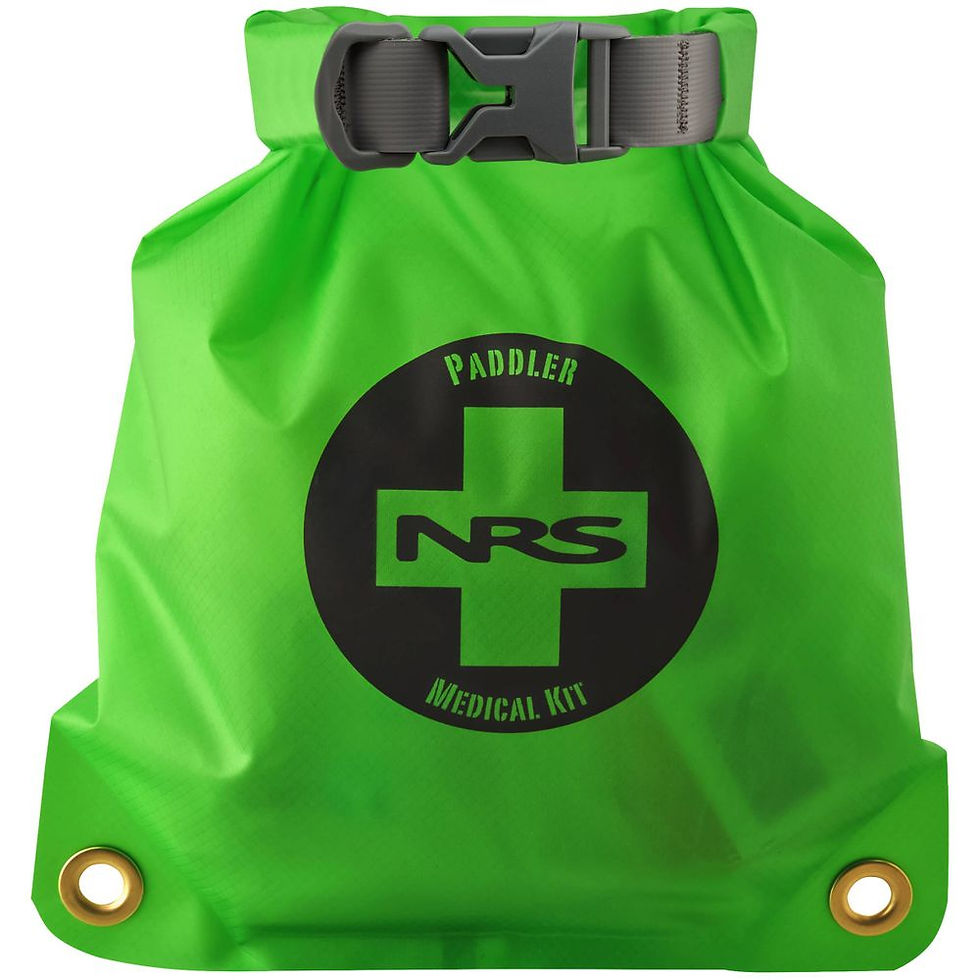
A compact first aid kit fits easily inside a small Ziploc bag or dry bag and disappears into your PFD or the hull of a Hornbeck.
Include:
Bandages and tape
Antiseptic ointment
Pain reliever
Antiseptic wipes
A hook removal tool or short length of heavy line (if fishing)
This isn’t a full expedition kit—just enough to save a day on the water.
Looking for something a little more substantial?
There are a couple of commercial options like the NRS Paddlers Medical Kit
or
The Small Tools That Solve Big Problems
Safety Knife

A fixed or folding river knife clipped to your PFD can:
Cut fishing line or rope
Free a snagged anchor
Solve problems fast, with one hand
Rope
A short length of rope or webbing earns its keep quickly:
A dock line, or to tie off to that shrub at lunch
A stirrup for self rescue
To tie-down gear or hang a dry line
Hornbeck boats are light enough that even a short rope goes a long way.
Anchoring, and Stability, Hornbeck Style
Hornbeck pack boats are designed around low, efficient seating that keeps you balanced, reduces wind exposure, and improves control. Fewer moving parts mean fewer failure points.
For anglers or photographers who stop frequently:
A stakeout pole or lightweight anchor system can help hold position
check out this video on a no drill anchor Trolley that works on a Hornbeeck
Keep rigging minimal to preserve the boat’s clean interior and easy carry
use a dog leash, retractable clothes line, or scuba reel to manage anchor line
Outriggers and heavy frames aren’t usually necessary—Hornbeck stability comes from hull design, not bolt-on accessories.
At the end of the day, safety in a Hornbeck isn’t about carrying more, it’s about carrying what matters. Thoughtful gear, properly stowed, keeps your boat light, responsive, and true to its purpose. When you pack smart, you paddle farther. You explore with confidence. You move quietly into places others won’t go. A Hornbeck is built to make the journey easier—your preparation is what makes it limitless.
Sources


Comments